Let Trump
Veto.
A two-year pause on the Senate filibuster.
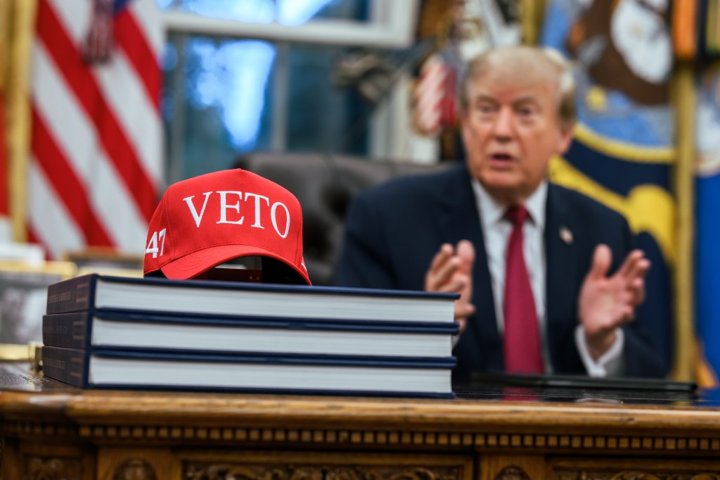
Trump has made clear he’s prepared to veto Democratic legislation. So why should the Senate’s 60-vote rule stop those bills from reaching his desk?
For the next two years, let the Senate pass legislation by simple majority. Let Americans see the healthcare, jobs, energy, and other priorities Congress is willing to put into actual bills.
November 5, 2026
Let Congress vote.
Let Trump decide.
Let Americans see.
THE DETAILS, IF YOU WANT THEM
A few fair questions.
What exactly is the proposal?
I’m advocating a two-year pause on the legislative filibuster so majority-supported bills can reach a final Senate vote. The aim is to show the public what Democrats can agree on and put into legislation. This is a proposal, not an enacted rule.
What has Trump said about vetoing bills?
In a November 3, 2026 interview, Trump described using vetoes to push Democrats toward negotiations. He also discussed making deals. The point here is his stated willingness to veto Democratic legislation, not a claim that he would reject every bill. Read the CBS News interview report.
Does every bill currently need 60 votes?
No. The familiar 60-vote threshold generally concerns ending debate on ordinary legislation, not final passage. Exceptions exist, including certain budget measures. See the Senate’s explanation of filibusters and cloture.
Would these bills automatically become law?
No. A bill must pass both the House and Senate in the same form before being presented to the president. Trump could sign it or veto it; other constitutional outcomes are also possible. Congress can override a veto with two-thirds votes in both chambers. See Article I, Section 7 of the Constitution.
Why only two years? What about the risks?
This proposal responds to a particular political moment: Trump has openly embraced his willingness to veto Democratic legislation. For the final two years of his presidency, let Congress put its priorities on his desk to be vetoed, and let the public judge the results.
This is an argument for a limited pause, not a permanent change. It would need an explicit end date and an agreed restoration process; restoration should not be assumed. Removing this hurdle could also help pass legislation I oppose.
Who is behind this?
This site expresses the author’s personal political opinion. It does not speak for a candidate, political party, or government agency.